Coca-Cola Embraces AI for Holiday Magic… and Controversy
We've all grown up with Coca-Cola's iconic holiday commercials, those heartwarming moments that signal the start of the festive season. But this year, something about the commercial is different. Coca-Cola has ventured into the realm of generative artificial intelligence (AI), giving its classic "Holidays Are Coming" campaign a futuristic, and somewhat controversial, glow up. This bold move has sparked both excitement and criticism, raising important questions about the role of AI in creativity and advertising.
Coca-Cola's History of Iconic Holiday Campaigns
Coca-Cola has a rich history of creating memorable holiday campaigns. Think of the polar bears, the Santa Claus imagery, and the iconic "Holidays Are Coming" trucks—these have become ingrained in our cultural consciousness. Nostalgia plays a powerful role in advertising, evoking positive emotions and connecting us to cherished memories, making brands like Coca-Cola feel like a part of our lives. This year's campaign attempts to leverage this nostalgia, but with a distinctly modern twist—the use of AI, a powerful but controversial tool in creative industries.
The Rise of AI in Creative Industries
AI algorithms can generate images, compose music, and even write scripts, opening up exciting new possibilities for advertisers—but also raising concerns about job displacement and the very definition of art. The "Holidays Are Coming" campaign, first launched in 1995, is a prime example of Coca-Cola's success; the image of the brightly lit trucks driving through snowy landscapes has become synonymous with the holiday season.
Decoding the AI-Generated Commercial
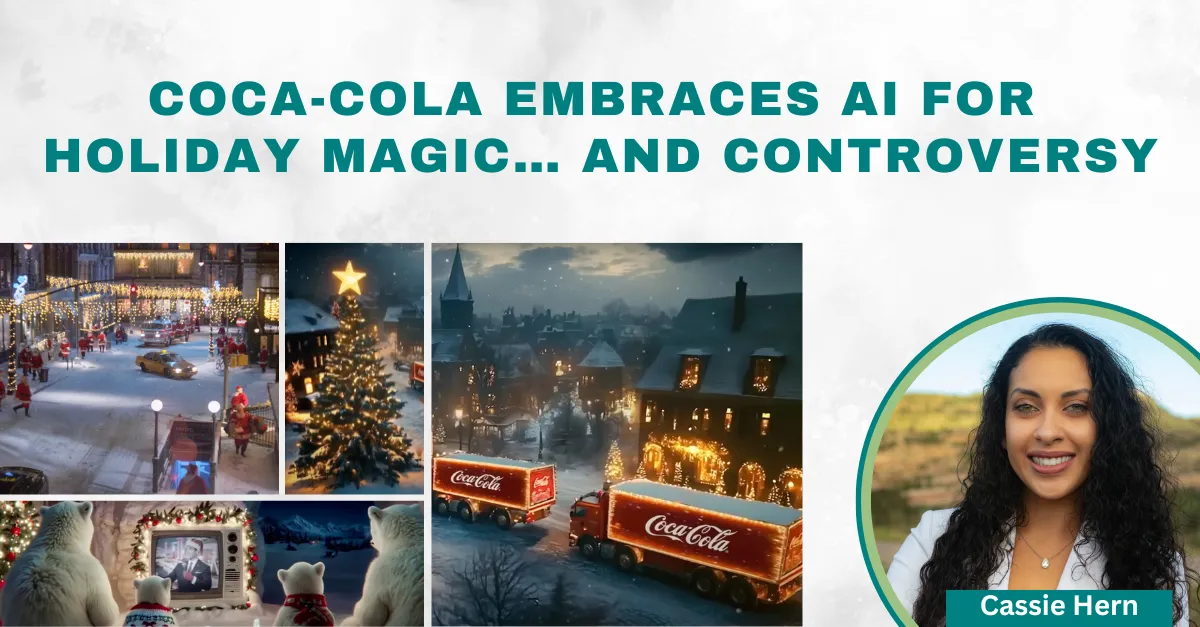
This year, Coca-Cola collaborated with creative powerhouses like Secret Level, Silverside AI, and Wild Card to produce three new holiday commercials, all infused with the magic of generative AI. The commercials feature familiar elements like snowy landscapes, festive animals, and the iconic Coca-Cola trucks, but with a tech-forward twist.
AI was used to create digital actors (with permission from real people) and stunning snowy scenes, eliminating the need for live filming in snowy locations. Coca-Cola utilized its Real Magic AI platform, powered by OpenAI, similar to image generators like DALL-E. This platform allows artists to access Coca-Cola archives for their projects and create AI-generated content. The commercials depict scenes like polar bears emerging from enchanted forests and Santa Claus himself, blending nostalgia with innovation. One key difference from the 1995 commercial is the use of AI-generated polar bears instead of human actors "lighting up" with excitement.
AI's Impact on Creativity
The campaign attempts to convey a message of holiday magic and connection, using AI to enhance the visual storytelling. However, the use of AI has reignited the debate about its impact on creativity. Some argue that AI is simply a tool that augments human creativity, allowing artists and marketers to explore new ideas and streamline production processes. Chris Barber, an AI developer at Silverside AI, emphasized the collaborative aspect, stating that these tools should be used "in conjunction with human vision and emotion." However, others express concerns about AI replacing human artists and diminishing the value of human creativity.

Alex Hirsch, creator of "Gravity Falls," sarcastically commented on the campaign, suggesting that Coca-Cola is using AI at the expense of human artists.
This sentiment is echoed in many social media comments criticizing the "soulless" nature of the AI-generated content.
Consumer Reactions, Social Media Buzz, and the Future and Ethics of AI in Advertising
The campaign has generated a mixed reaction. Some have praised Coca-Cola for its innovative approach and its willingness to embrace new technology. The efficiency and cost-effectiveness of AI-driven production have also been highlighted. However, many have expressed disappointment and even anger over the use of AI.
Criticisms range from concerns about job displacement to the perceived lack of emotional depth. Comments on YouTube show a strong aversion, with some calling them "soulless." Shelly Palmer, a professor at Syracuse University, even compared the commercials to "The Polar Express" on "bad acid," criticizing Coca-Cola for prioritizing cost reduction over creative innovation. This experiment with AI raises important questions about the future of advertising and marketing.
AI has the potential to create highly personalized advertising experiences and generate hyper-realistic content. However, this raises ethical concerns about transparency (letting consumers know when content is AI-generated), potential biases in AI algorithms, the impact on human creativity and employment, and the potential for misuse.
➡︎ What are your thoughts on seeing an increase in AI-generated videos and photos? How do you feel about brands using this technology in their advertising?